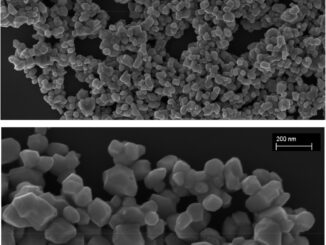
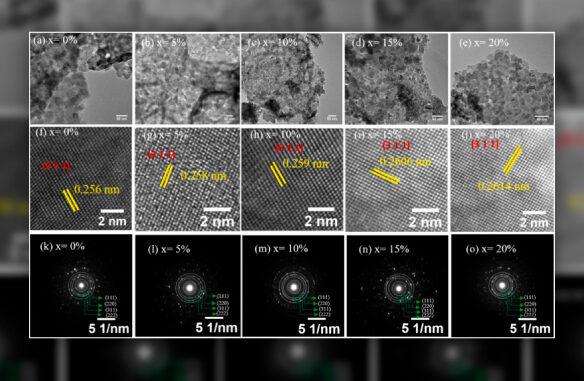
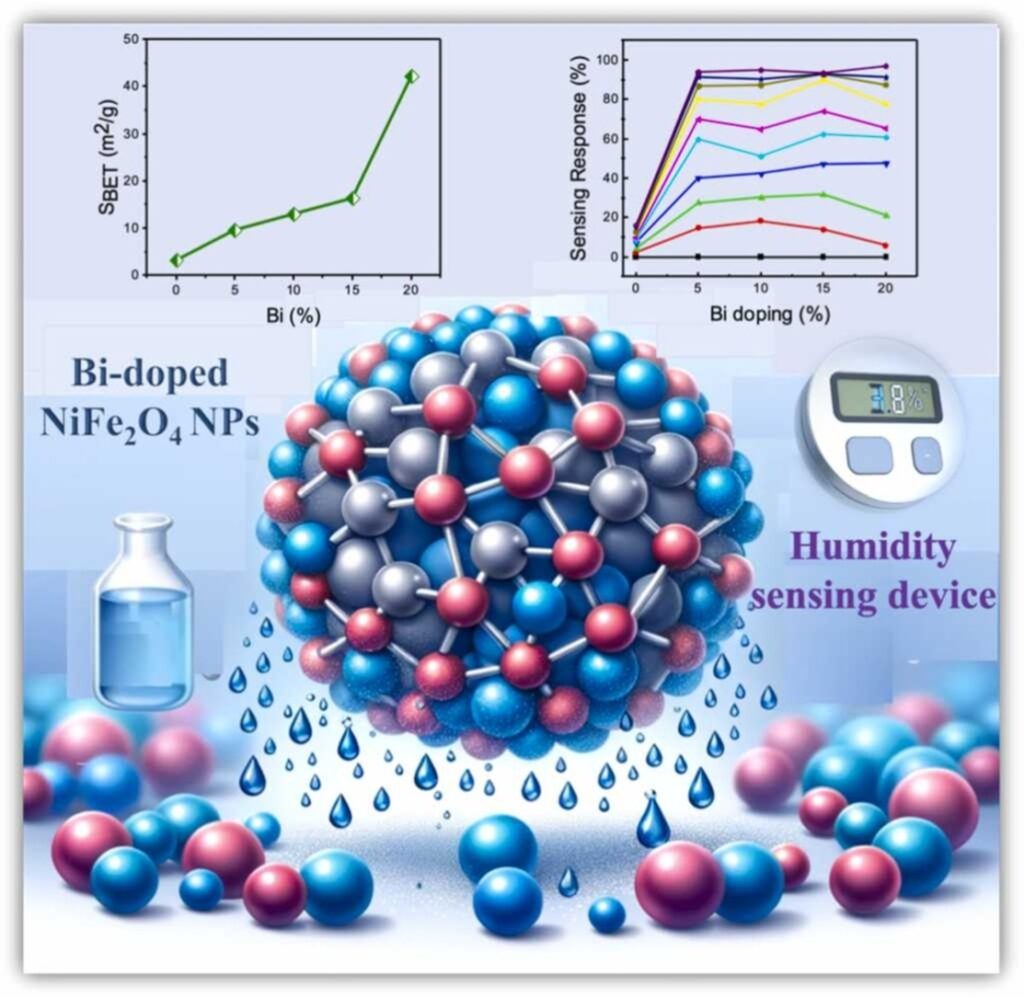
Abstract: Bi-doped NiFe2O4 nanoparticles were tested for humidity detection at various RH levels at room temperature. The findings indicated that sensors with higher Bi concentrations, particularly the ones with 20 % Bi doping, showed significantly enhanced sensing response—up to 97 %, a sixfold increase compared to undoped sensors. This significant improvement suggests that Bi contributes to synergistic effects that boost sensor performance. Density Functional Theory (DFT) calculations support this by showing that Bi introduces acceptor electronic states, heightening electrical responsiveness to moisture. These Bi-doped sensors exhibit quick response times, high accuracy, negligible hysteresis, and impressive stability, making them promising candidates for reliable humidity detection.
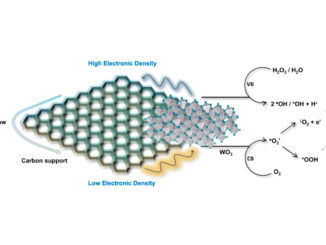
Graphical abstract:
Author(s): K Manjunatha, Tsu-En Hsu, Hsin-Hao Chiu, Ming-Kang Ho, B Chethan, Marisa C Oliveira, Elson Longo, Renan AP Ribeiro, Shih-Lung Yu, Chia-Liang Cheng, H Nagabhushana, Meng-Chu Chen, Sheng Yun Wu
First published: 1/1/2025
https://doi.org/10.1016/j.snb.2024.136645
CDMF
The CDMF, hosted at the Federal University of São Carlos (UFSCar), is one of the Research, Innovation and Dissemination Centers (RIDC) supported by the São Paulo State Research Support Foundation (Fapesp), and also receives investment from the National Council Scientific and Technological Development (CNPq), from the National Institute of Science and Technology of Materials in Nanotechnology (INCTMN).