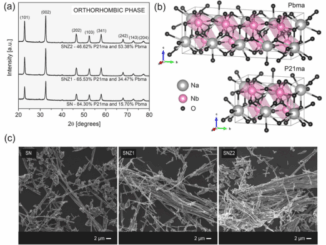
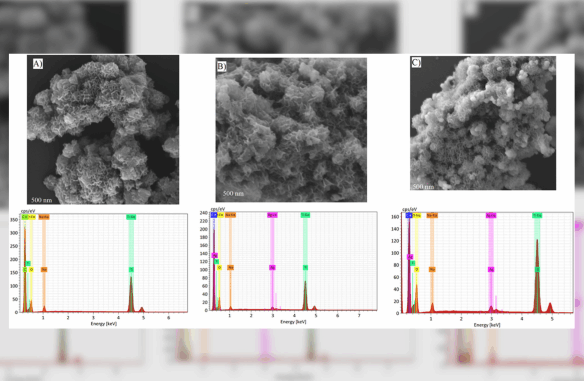
Abstract: This study investigates the enhancement of photocatalytic efficiency in silver-modified sodium and hydrogen titanates. Silver nanoparticles, particularly along the (201) crystal plane of sodium titanate, improve electron mobility and reduce electron-hole recombination, leading to more effective degradation of organic pollutants under light exposure. In hydrogen titanate, silver further boosts efficiency, especially under visible light, by enhancing charge separation and light absorption. The presence of silver also increases the surface area, providing more active sites for pollutant adsorption and preventing electron-hole recombination. The 5 % silver sample exhibited the highest photocatalytic efficiency, achieving the fastest degradation rate and a half-life of 35 min. In contrast, the 10 % silver sample showed reduced performance due to excessive silver loading, which caused light scattering, hindered irradiation, and trapped electrons, ultimately reducing efficiency. The key finding of the study is that silver modification significantly enhances photocatalytic efficiency, with the photocatalytic degradation of Rhodamine B (RhB) involving electron transfer from Ag nanoparticles to titanate nanosheets. However, excessive silver loading can impair performance, demonstrating the importance of optimal silver modification for maximizing photocatalytic activity. Overall, silver modification significantly improves the photocatalytic performance of both materials, enabling more efficient pollutant degradation.
Author(s): Bruno Hangai, PP Ortega, FC Alves, T Mazon, Elson Longo, AZ Simões
First published: 02/07/2025