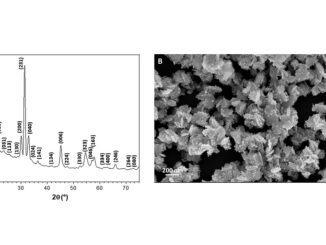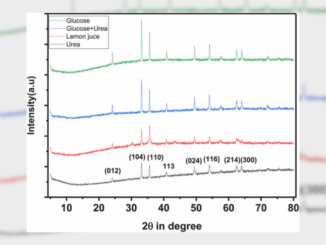
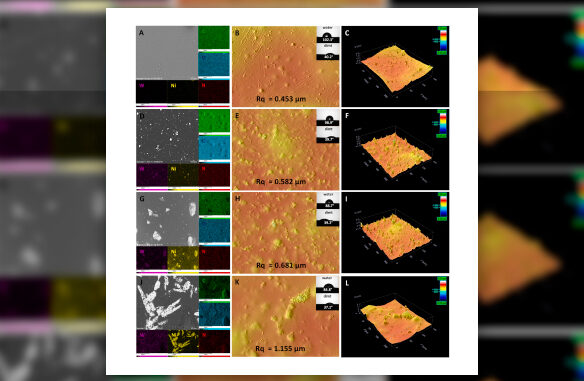
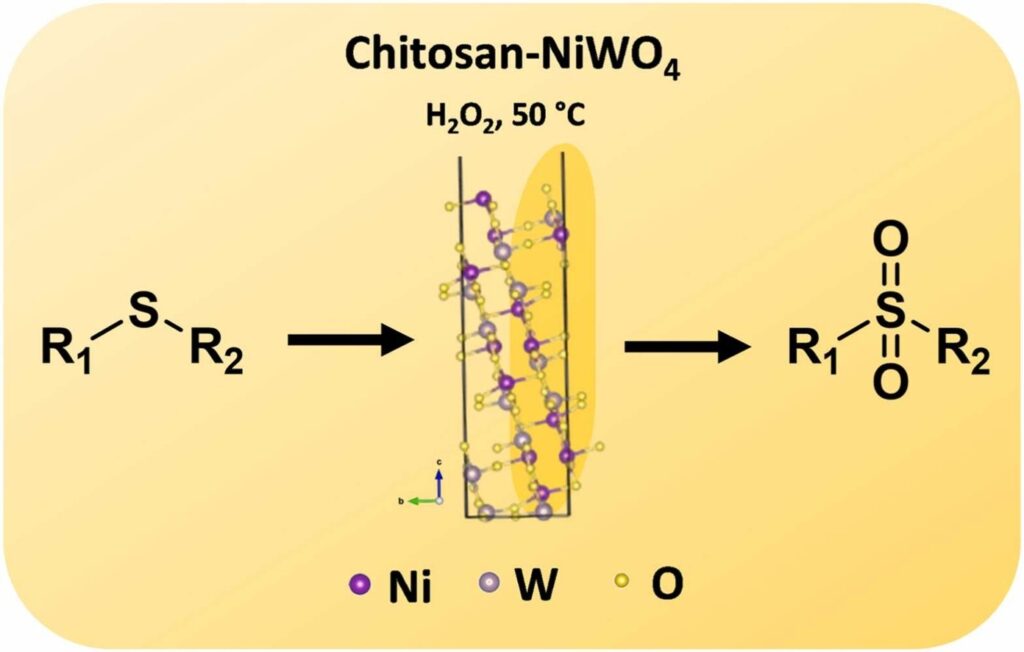
Abstract: In this work, catalysts based on composite films composed by chitosan with disordered NiWO4 (10, 20, and 40 % w/w) were synthesized for their application in the oxidation of sulfides to sulfones. The catalysts were characterized by X-ray diffraction (XRD), Fourier-transform infrared spectroscopy (FTIR), X-ray photoelectron spectroscopy (XPS), scanning electron microscopy (SEM), energy-dispersive spectroscopy (EDS), optical profilometry, and contact angle measurements. Optimization of the catalytic conditions was performed using thioanisole as the standard molecule, resulting in optimal conditions of 50°C, 1 h, 10 mg catalyst loading, 8 equivalents of H2O2 as oxidant, and acetonitrile as solvent. The results obtained were superior to those with crystalline NiWO4 (highly ordered), highlighting the crystallinity of the system as a key factor in the development of new catalysts. The catalyst exhibited high stability over successive catalytic cycles, and scaling up to 50 times was achieved. Additionally, the reaction scope showed good conversion for a variety of different sulfides, indicating the robustness of the catalyst. Analysis of the catalytic mechanism through scavenger tests and spectroscopic probes revealed that reactive oxygen species (ROS) are responsible for the oxidation of sulfides to sulfones. Furthermore, it was observed that the synergy between NiWO4 and chitosan is crucial for the effective generation of ROS in this reaction.
Graphical abstract:
Author(s): Giovanna A Grasser, Lara K Ribeiro, Elson Longo, Marcelo Assis
First published: 15/01/2025
https://doi.org/10.1016/j.cattod.2024.114999
CDMF
The CDMF, hosted at the Federal University of São Carlos (UFSCar), is one of the Research, Innovation and Dissemination Centers (RIDC) supported by the São Paulo State Research Support Foundation (Fapesp), and also receives investment from the National Council Scientific and Technological Development (CNPq), from the National Institute of Science and Technology of Materials in Nanotechnology (INCTMN).